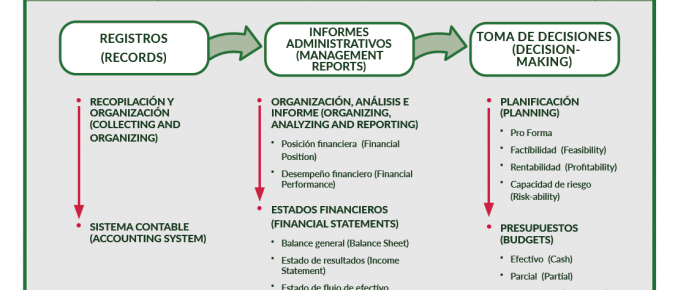
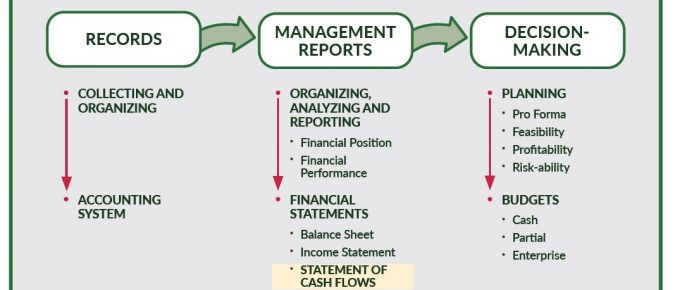
El estado de flujo de efectivo da seguimiento a las fuentes y a los usos del efectivo en el negocio de la granja durante el año anterior. También agrega perspectiva a la comprensión de la posición financiera y al desempeño del negocio de la granja.
La agricultura es un negocio complejo que exige registros precisos y una administración financiera cuidadosa.
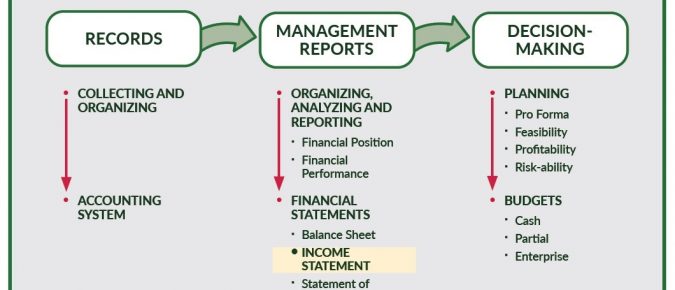
El estado de resultados es un informe del desempeño financiero del negocio de la granja durante un plazo dado. Mide las ganancias o las pérdidas en un periodo determinado.
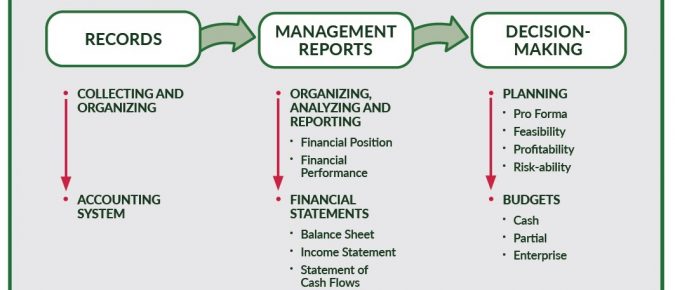
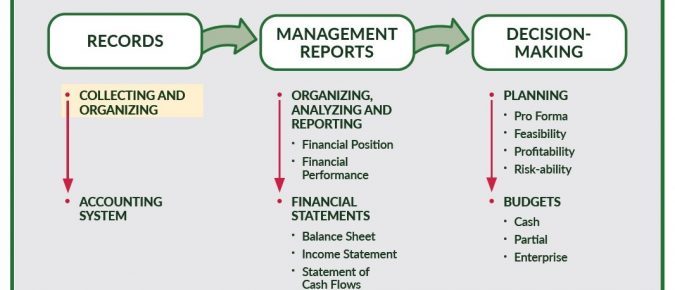
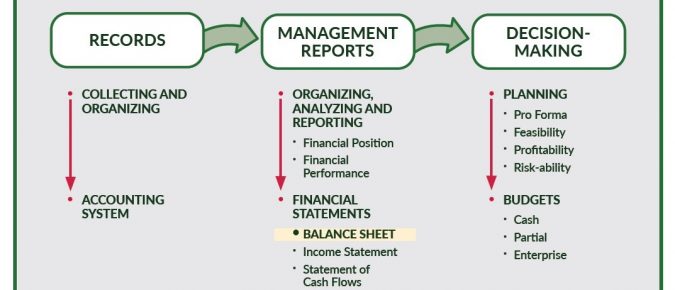
El modelo financiero para una granja ofrece un proceso lineal y circular para tomar decisiones de manera informada. Los registros se ingresan en informes y los informes ayudan a los agricultores a integrar sentido financiero en las decisiones de producción de la granja.
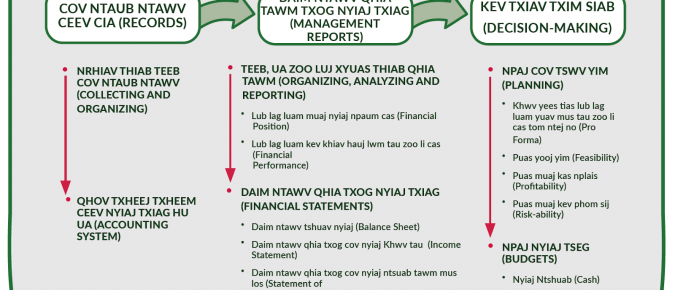
Daim Ntawv ntawm Statement of Owner Equity, kho kom haum qhov kev hloov ntawm cov nyiaj equity thaum pib ntawm daim ntawv balance sheet rau qhov xaus ntawm daim ntawv balance sheet from daim teb lub lag luam.
Daim ntawv ntawm Cov Nyiaj Ntsuab siv mus los statement of cash flows ceev qhia cov khoom siv thiab nyiaj ntsuab es siv rau hauv lub lam luam ntawm daim teb lub xyoo tas los no. Nws kuj qhia tau kom paub thiab nkag siab txog tias lub lag luam kev khwv tau nyiaj yog zoo li cas tam sim no thiab lag luam khiav zoo li cas ntawm daim teb qhov lag luam.
Ua teb mas yog ib qho lag luam cov nyom heev es thiaj yuav tsum tau ceev cov ntaub ntawv kom raug thiab ua twb zoo tswj cov nyiaj txiag.
Daim ntawv income statement yog ib daim ntawv qhia txog lub laj luam ntawm daim teb txog cov nyiaj txiag ntawm ib lub sij hawm twg. Nws luj xyuas qhov kas nplais thiab poob peev ntawm ib lub sij hawm twg.
Daim ntawv Balance Sheet yog ib daim ntawv qhia txog lub lag luam ntawm daim teb txog cov nyiaj txiag ntawm ib lub sij hawm twg. Nws teeb cov khoom ntiag tug (assets) kev lav phib xaub (liabilities), thiab lub lag luam raug nqi npaum cas (tus tswv cov nyiaj equity) thiab qhia txog lub lag luam ntawm daim teb kom pom ib muag ntawm ib ib hnub vas thib twg.
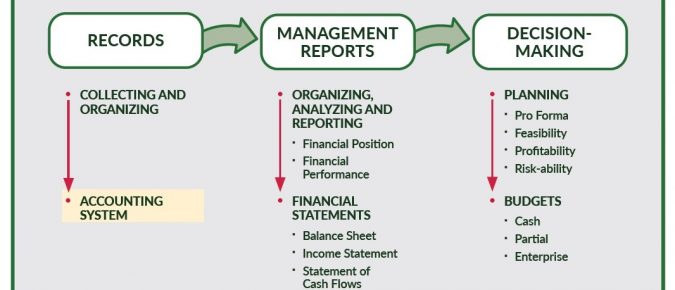
An accounting system yog ib co kev raus tes ua thiab cov txheej txheem es tau tsim kom nrhiav tau, ceev cia, thiab muab cov ntaub ntawv txog kev them nyiaj los tso rau hauv daim ntawv management report thaum muaj kev txiav txim siab.
El balance general es un informe de la posición financiera del negocio de la granja en un momento específico. Enumera los activos, pasivos y valor neto o capital (capital del propietario) y representa una instantánea del negocio de la granja en una fecha determinada.
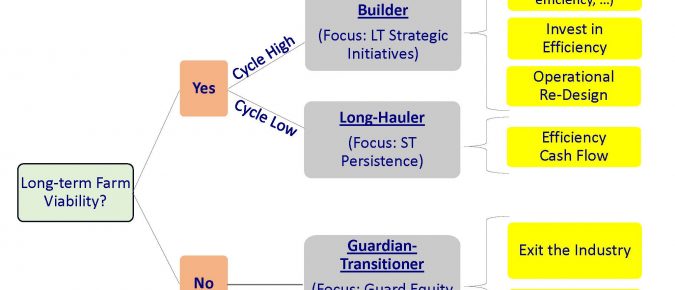
Long-term farm economic viability is the product of three parts – performance, capacity, and resilience. Performance is an efficiency measure, the ability of the farm business to create profit margins per unit of production. Capacity is whether there are enough production units (acres, cows, etc.) that when multiplied over the profit margin will cover debt service, asset maintenance and replacement, retained earnings and family living. Resilience is the ability of the business to take a punch and bounce back to normal operations.
The farm financial model offers a linear and circular process for informed decision-making. Records feed into reports, and reports help farmers integrate financial sense into farm production decisions.
Farming is a complex business which demands accurate records and careful financial management.
An accounting system is a set of actions and methods designed to collect, store, and process financial transactions into management reports for decision-making.
The balance sheet is a report of the farm business’ financial position at a moment in time. It lists assets, liabilities, and net worth (owner’s equity), and represents a snapshot of the farm business as of a certain date.
The income statement is a report of the farm business’ financial performance during a given time frame. It measures profit or loss in a given time period.
The statement of cash flows tracks the sources and uses of cash in the farm business in the past year. It also adds insight to the understanding of financial position and performance of the farm business.