Business values influence the farm’s goals and priorities. It is important to be able to recognize differences in the values of owners, stakeholders, managers, and other key personnel and have a process through which each is willing to compromise if necessary, to arrive at mutually acceptable goals and decisions.
Strategic thinking is the intuitive, visual, and creative process you use to make decisions about your farm business. Strategic thinking is all about thinking ahead, anticipating what your competition is going to do, and then taking risks to succeed.
If you are enticed by the potential of a value-added enterprise, then three potential steps to start with tomorrow after breakfast. One, find the stick and hit yourself over the head until you are ready to do your homework. Two, take time to learn more about value-added agriculture enterprises. Three, don’t go it alone. In every state there are people and organizations that stand ready to assist.
When working through developing a plan to transfer management decisions it is important to realize that management decisions should be transferred incrementally. Having a framework of when management decisions will be transferred will give both the owner and the successor generations peace of mind.
In farming, sweat equity is a term that is loosely used to define how established farmers use payment of a commodity or capital assets to replace some of the cash wages for employees. Sweat equity is also the term sometimes used to compensate a successor for years of labor and management that helped build the owner generation’s wealth.
In farming, sweat equity is a term that is loosely used to define the practice of using a commodity or capital asset to replace some of the cash wages for employees. Often times farms do not know how to document sweat equity as a payment for wages.
Research shows that the division of assets for inheritance is a common tension around farm succession planning. In some cases, the tension can be so great that the owner generation avoids making a decision until it’s too late. Take time to learn the contrast between fair vs. equal distribution of farm assets.
The best way to divide farm assets is a challenge that farm families face with each generation of owners. The fear of upsetting one’s children often causes parents to divide farm and family assets equally among all heirs. This is the second of a 3-part series about fair vs equal distribution of farm assets.
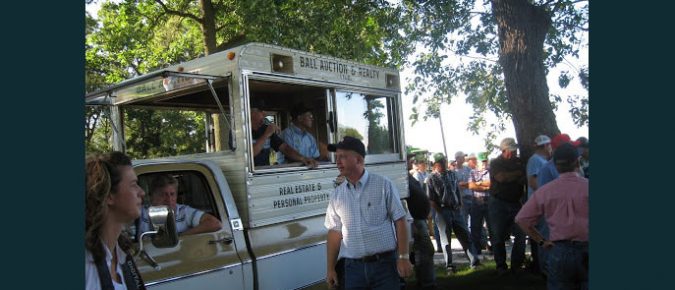
Once you’ve decided to buy a piece of farm equipment, your next challenge is sourcing it. UW-Madison Extension provides tips on finding equipment off-line.
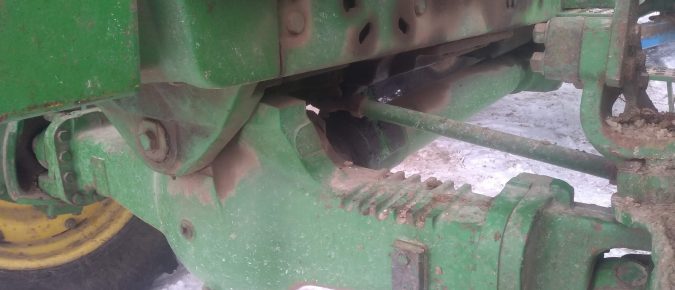
Successful farm tractor ownership requires a plan for scheduled maintenance and repairs as needed. This is especially true when purchasing a used farm tractor. UW-Madison Extension provides tips on keeping a tractor in good working condition.
If you are considering a purchase of a used farm tractor or other machine, even if you are not using it to do traditional farm work, safety must be a prime consideration. UW-Madison Extension provides some critical priority checkpoints to protect the personal safety of yourself, family members, workers and others who might be using the equipment that you purchase.
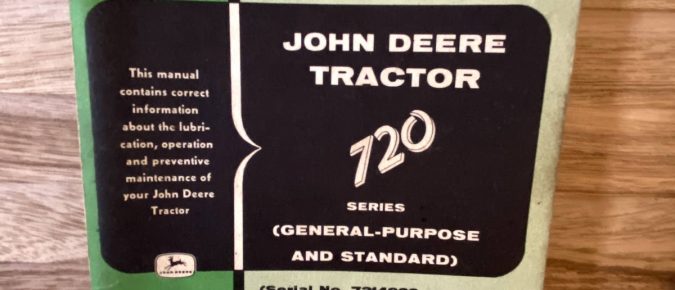
When you’re in the market to buy a used tractor or other piece of equipment, you’ll likely notice the differences in features between older and newer models as you look through sale listings. The good news is that despite all of these changes and the evolution of mechanized technology used in agriculture, tractors and other types of farm equipment are generally built to last. Older farm equipment that is well-maintained can be fully functional though it may lack more modern and important safety, comfort, or technology features.
Writing out a complete business plan is a time-consuming feat. Before you spend your time and energy writing a multi-page narrative, explore your ideas with a simple tool – the Lean Canvas. Adapted for use by startups, this simple one-page matrix can be a valuable tool to help farm entrepreneurs test a business idea in the context of nine key areas.
A common misconception in farm estate and succession planning is that federal estate taxes are among the biggest threats to getting the farm assets to the rightful heirs. However, we propose that the biggest threat to a farm estate getting to the rightful heirs is the owner generation’s lack of succession planning and not federal estate taxes.
During the farm succession process it is common for the owner generation and the successor generation to discuss a transfer of assets. However, a conversation about the transfer of management – which is important to the success of the farm succession – is often overlooked.
The monthly and annual spending plan worksheets located in the Cultivating your Farm’s Future workbook can be used to attribute expenses to the household and farm. In a farm succession, these worksheets can be used by both the owner and successor generation.
The monthly and annual spending plan worksheets located in the Cultivating your Farm’s Future workbook can be used to attribute expenses to the household and farm. In a farm succession, these worksheets can be used by both the owner and successor generation.
A lender’s primary interest is in whether you’re likely to fulfill the requirements of a credit agreement. When a creditor lends you money, he or she does it with the expectation of earning a profit, which is unlikely to happen if there’s a good possibility that you’ll default on the loan. The lender will be […]