

Home » Forward Farm Safety Toolbox » Forward Farm Safety Toolbox – Creating a Culture of Safety
Forward Farm Safety Toolbox – Creating a Culture of Safety


Farm Safety Toolbox
Creating a Culture of Safety:
Videos
Safety Policy Template
JSA Analysis Template
Tracking and Reporting Sheets
Supplemental Learning
Home » Forward Farm Safety Toolbox » Creating a Culture of Safety
Creating a Culture of Safety – Practical Guide
Read in: English | Español
Why is it important to Create a Culture of Safety?
Agriculture is a high-risk industry. Whether it’s dairy farming, growing cranberries, or producing grain and silage, working in agriculture is dangerous.
- Agriculture’s death rate is about six times higher than in all other industries combined.
- In Wisconsin, we can expect to see anywhere from 22 to 35 farm fatalities in 2026.
- Every year, around 10,000 people suffer serious injuries on Wisconsin farms. Dairy and livestock operations present unique injury risks.
- Machinery including tractors, harvest equipment and other farmstead machines can be deadly if not operated, maintained, and serviced correctly.
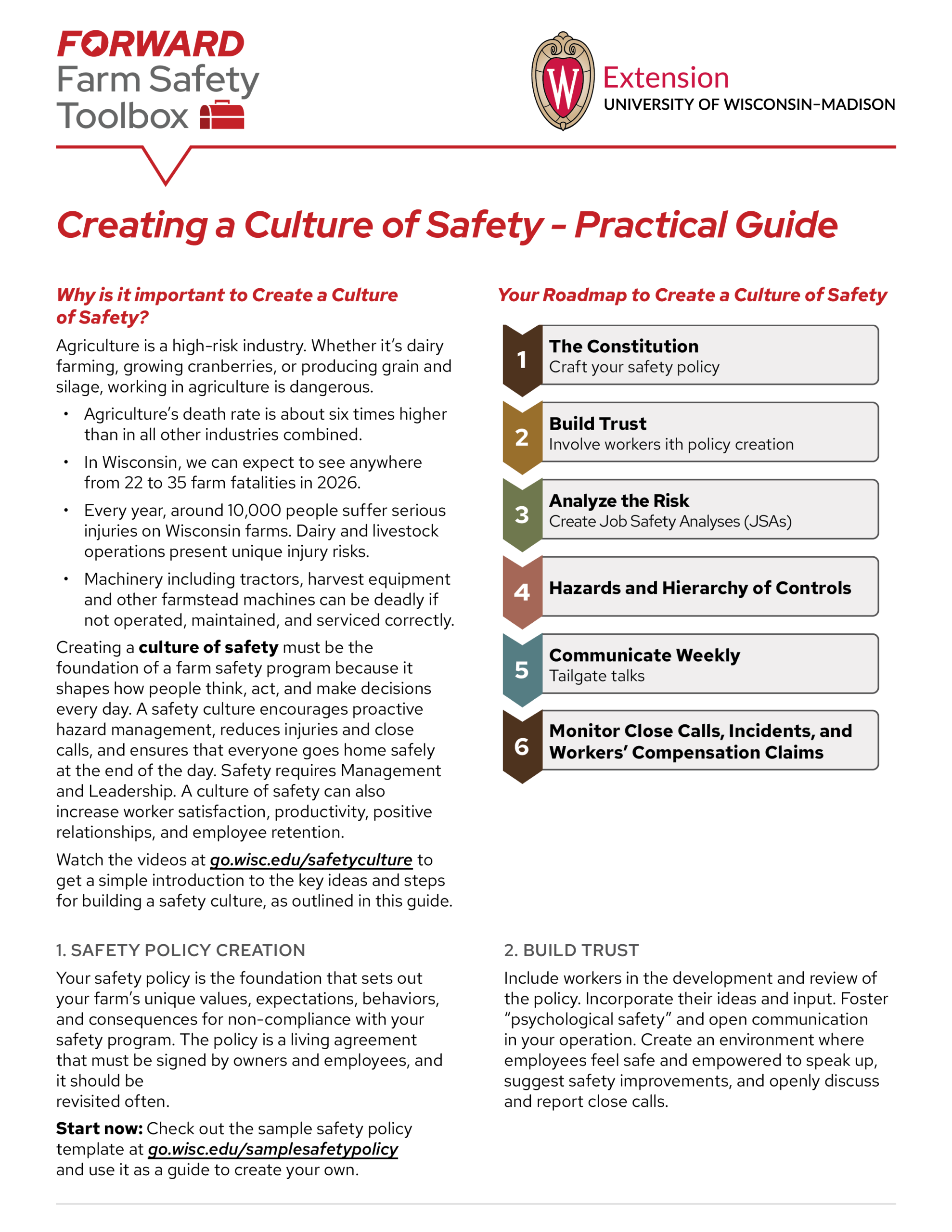
Creating a culture of safety must be the foundation of a farm safety program because it shapes how people think, act, and make decisions every day. A safety culture encourages proactive hazard management, reduces injuries and close calls, and ensures that everyone goes home safely at the end of the day. Safety requires Management and Leadership. A culture of safety can also increase worker satisfaction, productivity, positive relationships, and employee retention.

Watch these videos on creating a culture of safety to get a simple introduction to the key ideas and steps for building a safety culture, as outlined in this guide.
Your Roadmap to Create a Culture of Safety
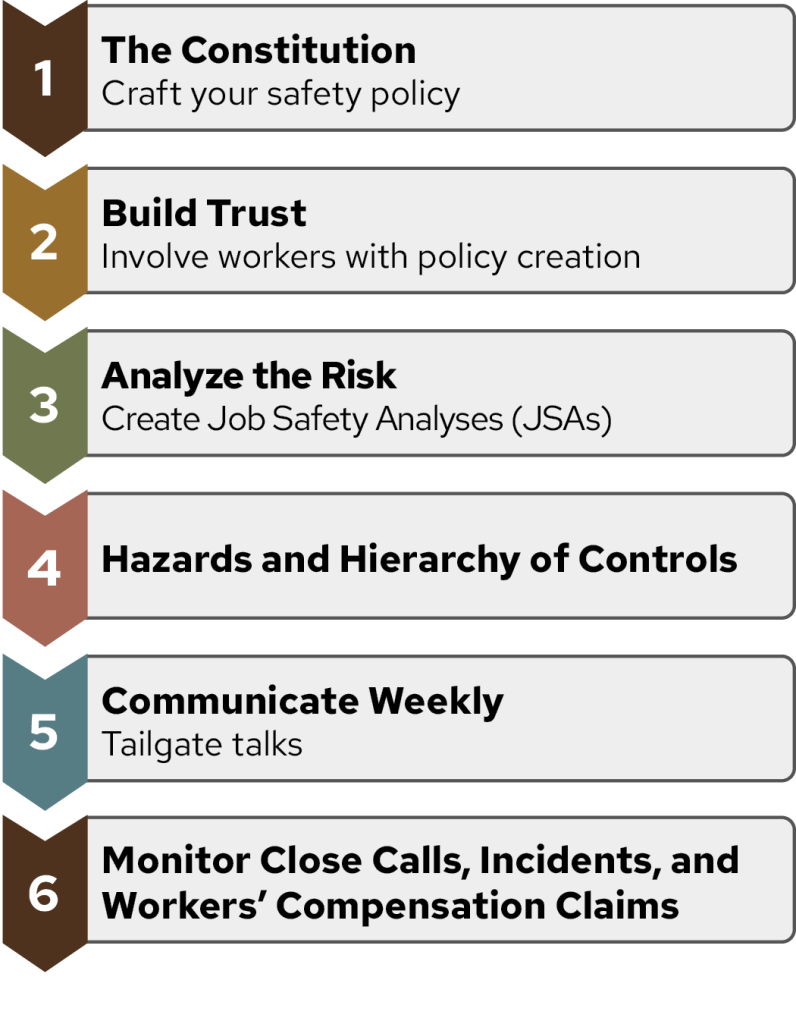
Safety Policy Creation
Your safety policy is the foundation that sets out your farm’s unique values, expectations, behaviors, and consequences for non-compliance with your safety program. The policy is a living agreement that must be signed by owners and employees, and it should be revisited often.
Build Trust
Include workers in the development and review of the policy. Incorporate their ideas and input. Foster “psychological safety” and open communication in your operation. Create an environment where employees feel safe and empowered to speak up, suggest safety improvements, and openly discuss and report close calls.
Analize the risk, Job Safety Analysis
The Job Safety Analysis (JSA) tool involves breaking down everyday farm tasks into a series of individual steps.
Once each step of a task is clearly identified, your workers are asked to brainstorm all of the potential hazards for that step, and decisions are made on how those hazards will be dealt with.
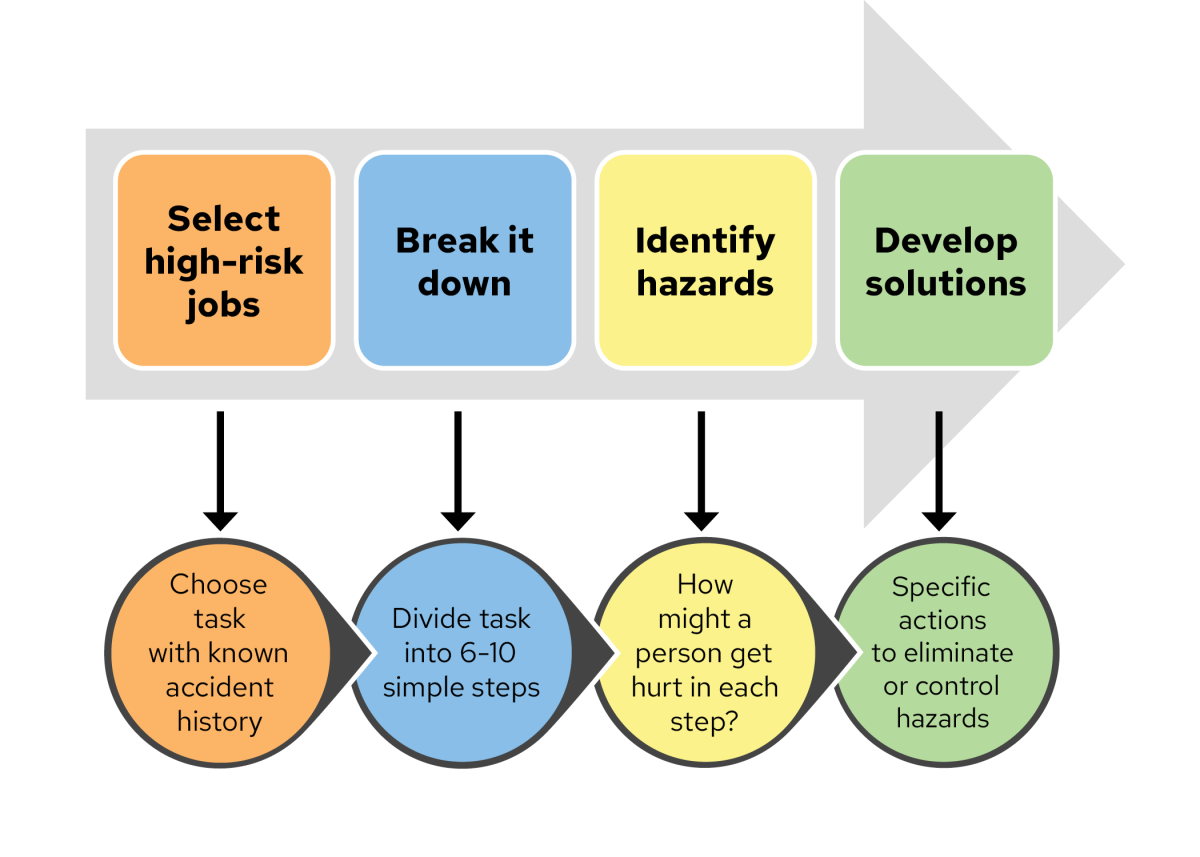
Developing JSAs isn’t just about improving safety; it’s a great way to engage your team. Bring people together, encourage discussion, and involve workers in creating a safer workplace. When people are part of the process, they take safety more seriously.
Hazards and hierarchy of controls
The Hierarchy of Controls is a safety tool used to prioritize the most effective ways to develop solutions and stop injuries before they happen. Think of the hierarchy like a ladder. The higher you are on the ladder, the better the protection.
The hierarchy is divided into two main groups based on how much they rely on “worker behavior.”
High-Level Controls (Most Effective)
- Elimination (Remove the hazard)
- Substitution (Replace hazard with something safer)
- Engineering Controls (Building a barrier, like a guard on a machine or fence a manure lagoon)
Why they work: High-level controls are the “gold standard.” They remove the danger or keep it away from you automatically. To stay safe, you don’t have to remember to do something every single time. Even if you are tired or distracted, the protection you’ve created is still there working for you.
Low-Level Controls (Least Effective)
- Administrative (Rules, signs, and training)
- PPE (Personal Protective Equipment like gloves, masks, or boots)
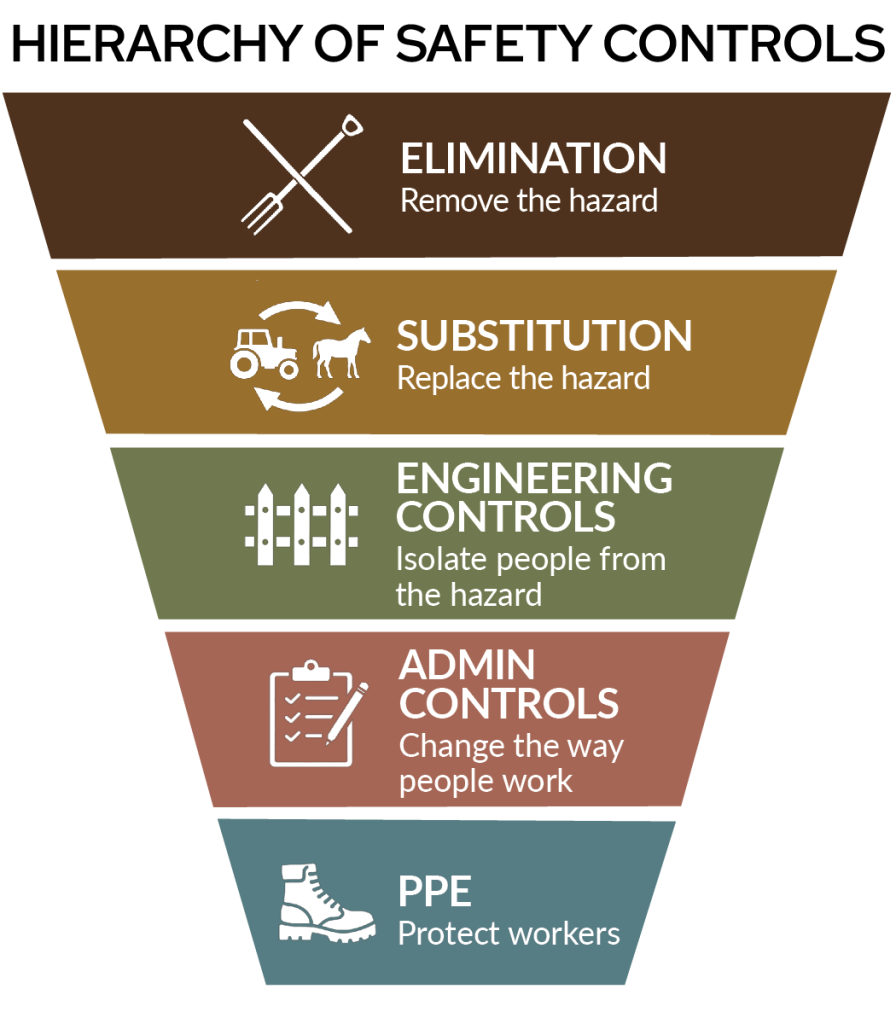
Low-level controls are still vitally important. But we should think of them as a “last line of defense.” They only work if a person does everything perfectly. If you forget your safety glasses or if a coworker doesn’t read a warning sign, nothing will stop an injury. These methods don’t fix the hazard; they just try to reduce the damage if something goes wrong.
The Bottom Line
Whenever possible, try to fix the problem at the top of the list (like fixing a broken machine) rather than relying on the lower controls (like wearing a hard hat while working under a broken machine).
Communicate regularly
Build the habit of having informal weekly tail gate conversations with your team:
- Length: Short, 10-15 minutes
- Timing: Early in the week
- Topics: seasonal review of recent close calls
Effective farm safety training1 is an important tool that builds a positive and supportive workplace culture. When employers prioritize their care about safety, they show they care about their team’s well-being. This strengthens connection and trust.
A recommended method is brief (10-15 minute) “toolbox” training. These can be informal sessions in familiar environments, such as the lunchroom, the shop, or while gathered around a machine or work setting. These meetings should be:
- Brief and Consistent: Keep sessions under 15 minutes and schedule them weekly or biweekly.
- Small and Engaging: 5–10 people are best and will encourage participation and conversation.
- Accessible: Ideally, have a “visual” present like a machine or animal handling situation in the background. Use simple language to accommodate different reading levels and languages. If you have a handout, keep it simple and to the point.
Successful safety toolbox training involves two-way conversation. When workers are encouraged to share experiences and concerns, they feel respected and valued. This leads to higher safety compliance, reduced risk, and a stronger return on investment for the farm business.
Monitor progress
Tracking and documenting close calls, workplace incidents, and workers’ compensation claims is essential for maintaining a safe and accountable work environment. Most importantly, consistent tracking fosters a culture of transparency and continuous improvement.
*Note: If you have more than ten employees on your farm, OSHA requires additional recording and reporting of work-related illnesses, injuries, and deaths. See www.osha.gov/recordkeeping/recording for additional guidance.
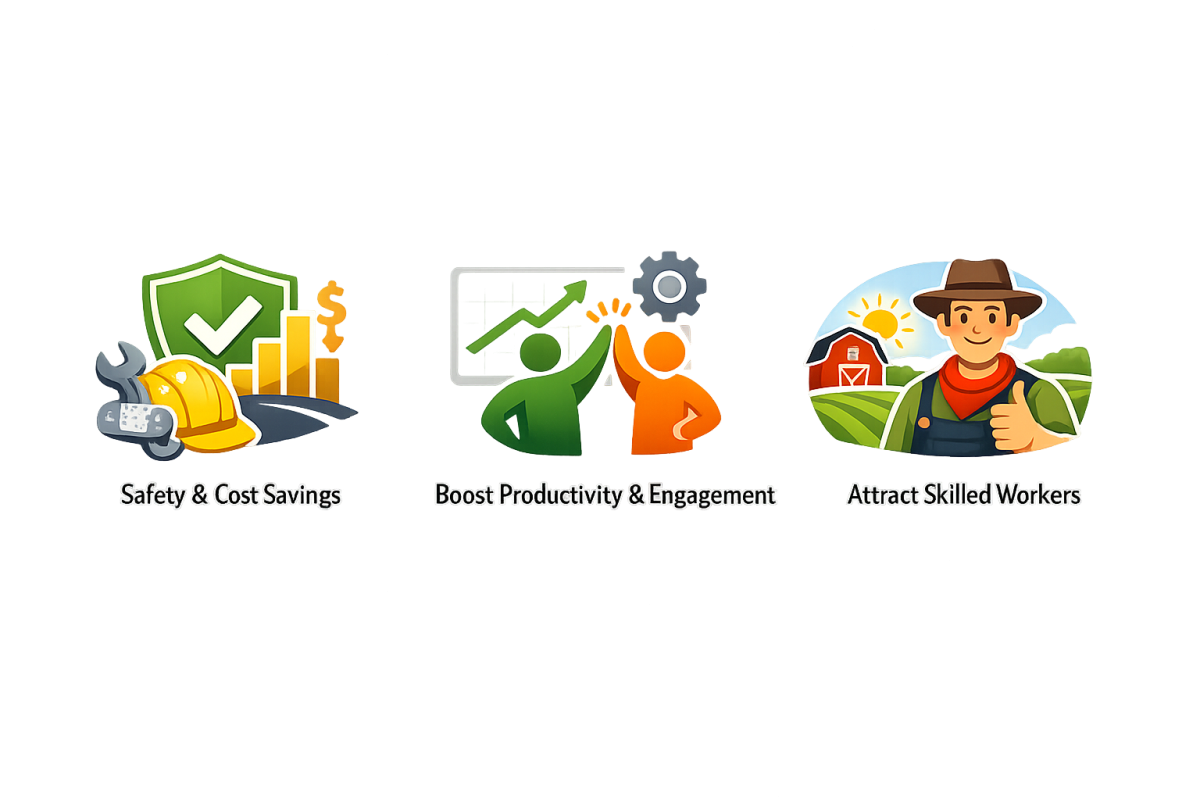
We hope this safety guide helps you to:
- Achieve safety excellence in your operation, where fewer injuries and equipment repairs translate into meaningful savings across your expense lines.
- Increase productivity and employee engagement
- Attract skilled workers who value a safe farm environment.
Supplemental Learning
Watch: Creating a Culture of Safety
1. What is Safety Culture?
2. Tools to Build a Safety Culture
3. What is a Safety Policy?
4. Job Safety Analysis
5. Benefits of a Safety Culture
References
- Effective Farm Safety Training Starts with a Purpose, John Shutske, University of Wisconsin-Madison Division of Extension Farm Management Program – https://farms.extension.wisc.edu/articles/educating-your-farm-workforce-with-purpose/