Introduction
Everyone is Welcome
Inclusion safety refers to individuals feeling accepted, valued, and genuinely included as part of a group or team. (1)
Every human being is equal at birth; however, our differences are shaped by our place of birth, our family, and ultimately the society that surrounds us. Despite these differences, all humans share a common set of needs such as physical, security, belonging, and fulfillment as described by Timothy R. Clark in his hierarchy of needs. (2) When leading working teams, it is essential to keep these fundamental conditions in mind since we tend to judge another person’s worthiness based on indicators like appearance, social status, or material possessions. (3)
Once basic physical needs, such as food and housing, are met, psychological safety becomes essential in addressing the needs of security, belonging, and fulfillment. According to Timothy R. Clark’s framework, inclusion safety forms the foundation of psychological safety by ensuring individuals feel accepted and respected.
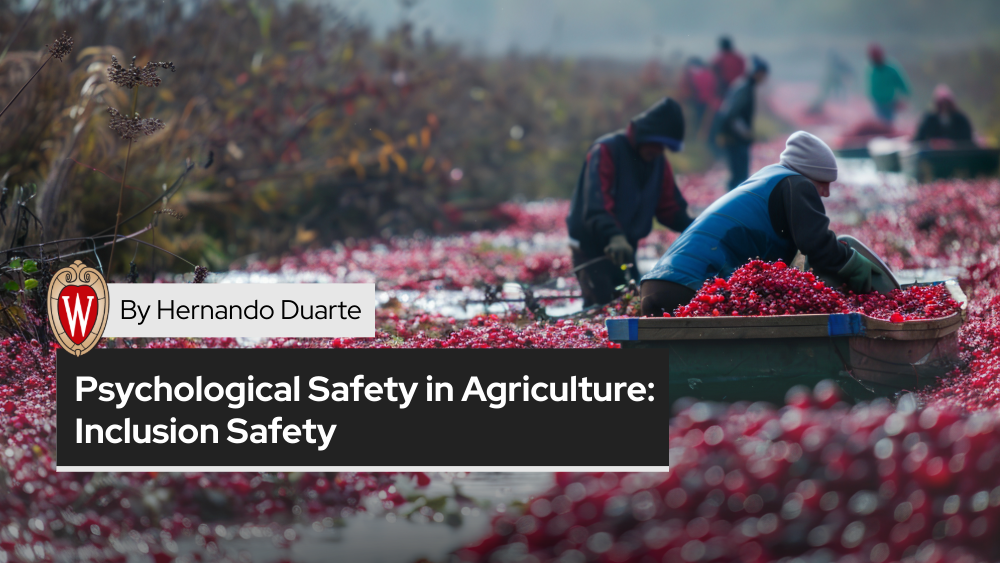
Leaders in agricultural operations in the United States must recognize that inclusion safety is especially important because the agricultural workforce is highly diverse, with workers coming from many countries of origin and cultural backgrounds. If employees feel or are excluded, motivation and engagement drop while turnover rates soar, which cost farms time and money.
How to Foster Inclusion Safety in the Workplace
The best and most powerful tool to create inclusion is during the onboarding process. This process:
- Introduces new team members in a way that makes them feel genuinely welcomed
- Reinforces that every role matters, from entry-level to leadership.
- Clearly communicates expectations around respect, communication, and teamwork.
- Shares the farm’s mission, vision, and values to help employees feel connected and included in the farm’s culture.
- Creates opportunities for employees to be heard and engaged through thoughtful questions that reflect interest in them as whole individuals, beyond their job roles.
Benefits of Inclusion Safety
When employees feel they are included, they:
- Are highly engaged
- Build trust with leaders and coworkers
- Communicate more effectively
- Stay longer at their workplace
- Are more productive
Building inclusion safety starts with intentional leadership. Start practicing inclusive leadership today so you retain highly motivated and engaged human talent.
Read Next
The next article of the psychological safety series takes a closer look at learning safety, the second stage of psychological safety and its role in helping individuals grow, ask questions, and develop new skills without fear.
← Previous: Overview
Next: Learning Safety →
Published: Jan. 16, 2026
Reviewed by: Stephanie Plaster, Agriculture Business Development Outreach Specialist, and Robert A. Milligan, Ph. D, Senior Consultant, Dairy Strategies, LLC, Professor Emeritus, Cornell University
References
- (1, 2, 3) Clark, T. R. (2020). The 4 stages of psychological safety: defining the path to inclusion and innovation. First edition.