The Evolution of Agricultural Technology: Past, Present, and Future
Technology advancements have always shaped work and life on the farm. Farmers relied on animal power to plant fields and harvest crops for thousands of years. Domesticated animals like oxen were first used for farm work over 6,000 years ago, and horses remained a primary power source on farms well into the 1900s. Over the years, as technology evolved, steam engines were introduced on farms in the 1800s. These massive machines often replaced the labor of hundreds of people or animals. Steam engines slowly gave way to tractors, which were more mobile, easier to operate, and more affordable. The electrification of rural areas throughout the early to mid-1900s further transformed the work on farms, making feeding and milking equipment more efficient and revolutionizing building heating, ventilation, and product storage. This slow progress in ag technology from animals to steam power to other forms of mechanical and electrical power seemed glacial, largely because it occurred over a full century and a half.
But, after the 1950s, technology development and adoption in agriculture accelerated. By the 1960s and 70s, tractors and farm machinery became larger and more sophisticated. Safety and operator comfort improved through innovations such as improved shielding, rollover protection, and better highway lighting. Cabs became common, providing operators with protection from the elements while incorporating monitors, sensors, and early control systems to assist in farm operations.
Technology change even more quickly sped up in the 1980s and 90s as personal computers became more affordable for small businesses and farms. Farmers could now collect and analyze production data using spreadsheets and customized record-keeping software. The 1990s also saw a boom in precision agriculture tools like GPS and on-the-machine data storage devices, allowing producers to monitor yields, optimize fertilizer application, and better manage their inputs. In animal agriculture, the first commercial milking robots were introduced in Europe in 1992, a key milestone in automated livestock management. Over time, the technology used to monitor feed intake, milk production, and other animal-related factors also evolved.
From the early 2000s to today, agricultural technology has continued this rapid advancement. Modern machines have sensors, control systems, and electronic devices that can help automate nearly every farm task. Machines can monitor operating conditions, operate without direct control through systems like auto-steer, adjust temperature and humidity levels for animal comfort, and perform tasks that once required monotonous manual labor. In some parts of the U.S., we now see robots that can weed fields, harvest products, and spray fields without the need for a human operator on a machine.
The continued widespread adoption of smartphones has made all of this technology more accessible than ever, allowing farmers to manage their operations both on-site and remotely with powerful computing and control tools at their fingertips. As we move rapidly through the 2020s and begin to integrate artificial intelligence into farming practices, we anticipate further advancements in technology can and will improve the overall use of agricultural resources like land, soil, water, labor, capital, and critical inputs like feed, fertilizer, and seed..
The Future of Agricultural Technology: What’s Driving Innovation?
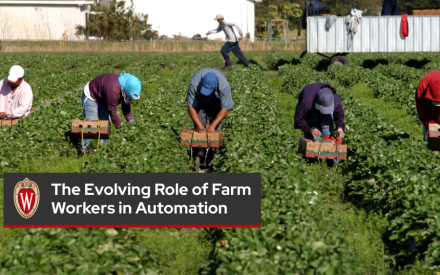
While this history reminds us of the steady march in increased farm mechanization, several modern factors are further accelerating the push toward advanced technology in agriculture. Labor shortages remain a significant challenge, driven by shifts and uncertainty in national immigration policy, economic pressure, demographic changes, and the aging of rural communities. We also know that farm work sometimes carries with it some negative perceptions based on relatively low wages, long hours, and worker concerns about their safety, health, and desirability of working conditions.
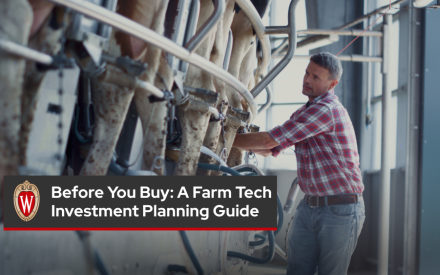
For many farmers, investing in new technology is part of the solution to these and other challenges. However, adopting highly automated machinery, feeding robots, automated milking systems, and other high tech solutions in animal and crop production can be daunting. Many producers recognize the need to explore automation to remain viable or to be able to attract their family to stay involved on the farm, but are unsure where to begin. Economic considerations play a significant role—producers need solid data on the costs of these investments and the benefits, including labor savings, efficiency gains, increased production, and improved product quality. Technology offers an opportunity to enhance safety on the farm. If we can replace physical human labor with well-designed, effective machines and automated systems, we can reduce the physical strain on operators and employees. This creates the opportunity to improve workplace safety, and it can boost job satisfaction, while possibly encouraging more people to stay involved in agriculture.
A Guide to Navigating Agricultural Technology Investments
In response to the growing interest in farm automation, this series of articles—published throughout 2025—will explore key considerations for farmers looking to integrate new technology into their operations. Topics will include:
- Workforce and labor considerations when adopting technology and automation.
- Preparing for future technology investments by assessing current needs and long-term goals.
- Maximizing the potential of existing digital technology while keeping data and planning organized.
- Learning strategies to ensure continued education and preparedness for emerging agricultural advancements.
- Financing, communication, and stakeholder engagement to successfully implement technology transitions.
As the agricultural industry evolves, staying informed and strategically planning for technology adoption will be crucial for farm success. This series will provide the insights and guidance necessary to help farmers navigate the rapidly changing environment of agricultural automation.