
This article was originally published in Hoard’s Dairyman.
Farm succession is exciting and stressful
The possibility of a next-generation joining the farm can be an exciting time; yet change, even positive change, can be stressful. Farm succession and its many components is sometimes overwhelming for farm families.
If a farm owner is lucky, succession may be something they do twice in a lifetime, once when taking over the business and again when passing it down to the succeeding generation. Early planning provides time for the successor generation to build management skills and equity and for the owner generation to service debt and plan for retirement.
A family farm inherently mixes family and business issues. Family and business systems focus on different goals. Families are concerned with emotional implications and focus inwardly on the family needs which can often emphasize maintaining stability or limiting change. Successful businesses focus on performance and external influences and take every opportunity to use change to their advantage.
In a family business, over-emphasizing one system over the other leads to conflict. Family farms can acknowledge the differing goals of family versus business while also finding some common values.
One way for a farm to begin separating family and business and improve communication is to focus on a three-step process of evaluation and planning. If farm members are having trouble communicating about farm succession issues, focusing on more tangible aspects of the business can bring the farm members together to address operational issues and improve the business. Building trust through this process can provide a bridge to planning for long-term decisions and succession.
Step 1. Where is the farm now?
Taking stock in the business as it stands now can help put all members of the farm on the same page.
Farm members should:
- Determine the readiness of farm members to plan for the future. Is everyone committed to discussing the farm business, devoting the time and implementing the decisions made?
- Review the financial statements for three to five years to determine the profitability, cash flow, financial position, solvency, and liquidity of the business. This may also include reviewing each enterprise to find out which is most profitable.
- Evaluate the working infrastructure (age, condition and adequacy of the machinery and buildings).
- Review production data, identifying both positive and negative trends.
- Discuss the management skills of the business members and the labor needs of the business.
- Discuss how decisions are made – both operational and strategic decisions.
- Develop current job descriptions for each farm member, including owners/managers. These descriptions should include areas of authority to make decisions.
- Determine the quality and quantity of land available to the business.
- Assess the local and community infrastructure (availability of supplies and services, repairs, markets and labor, community support of agriculture)
Identifying Values
Another component of this step is identifying individual and family values. These, in turn, shape the business’s values. Family culture, education, personal experiences and world events shape a person’s values. While family members can share similar values, their definitions of honoring those values may be different.
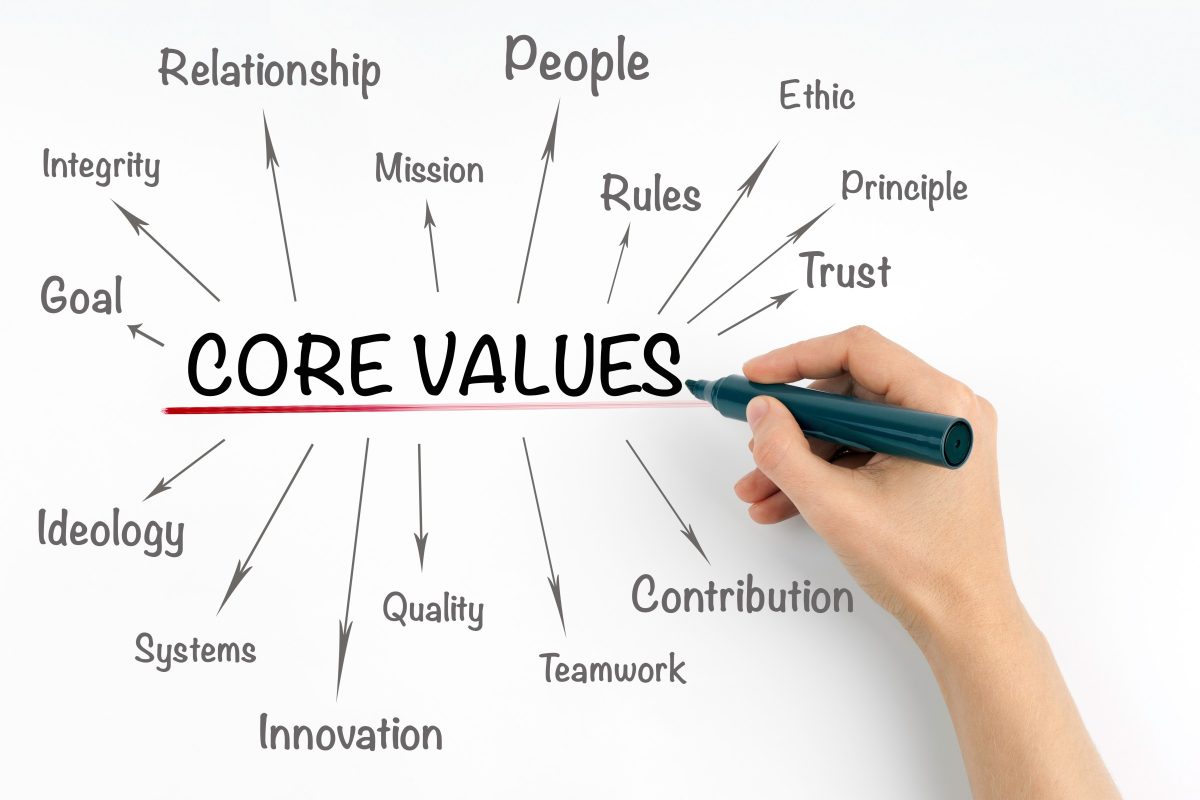
For example, a common value for those in a family business is family. However, defining how to honor that value can be different between individuals or generations. The owner generation may feel that contributing long days to the family farm is a way to honor the value of family. The succeeding generation may feel spending time with their spouse and children away from the farm is the best way to honor their family values. With these differences in mind, value exercises should go further than identifying words and encourage people to identify the outcomes and behaviors that indicate if they are living their values.
By fully analyzing the current farm business performance and structure, the farm members can pinpoint areas of strength to build upon and areas of weakness to address. Including the next generation in the analysis and evaluation of the farm business allows them to provide input and ideas.
It also sets the tone for communicating as farm partners. While this may not immediately change communication patterns established in the family, it can help members focus on common goals to improve the business. A farm family communications consultant or mediator can be helpful if farm members cannot communicate at a level to complete an analysis and address management issues.
The Core Values Clarifying Exercise from the Cultivating Your Farm’s Future: A workbook for farm succession planning in Wisconsin can help farm members start a conversation about their core values.
Step 2. Where do we want to be?
The next step is to answer, “Where do we want to be?” This is when farm members can think about their goals or what we sometimes call “Intentions” for themselves and their families. This is also the step where individuals can envision what they want for their personal lives and for the farm business.
What are your intentions around the farm succession?
Considering and talking about each person’s intentions helps everyone better understand the goals or outcomes that each person wants as a result of a succession plan.
Intentions the owner generation may want to consider are how strongly do they feel about:
- The land/farm remaining in family ownership
- The farm business continuing after they step back — and does it matter if it is children, other family, or non-family who are taking over the business.
- Their financial needs and if they need full market value from the sale of assets or if they can offer a discount to the successor
- Changes to the operation, for example, what type of enterprise and the size of the operation
- Providing labor, management, or advice as they transition out of the leadership of the farm
- The distribution of assets among on-farm and non-farming heirs
Intentions the successor generation may want to consider are how strongly do they feel about:
- Their willingness to make financial sacrifices and invest time and labor into the farm, and take on farm debt
- Their children working on the farm/their children having opportunities to participate in sports or other non-farm activities
- Changes to the operation, for example, what type of enterprise and the size of the operation
- Their need to develop management skills to successfully run the business
- The balance of farm work and taking time off/vacations
- The distribution of assets among on-farm and non-farming heirs
The worksheets, Intentions for the Owner Generation, and Intentions for the Successor Generation from the Cultivating Your Farm’s Future workbook can help you develop your goals or intentions for the succession planning process.
What is your vision around farm succession?
A Japanese proverb provides a great perspective about creating a vision for your farm succession. “Vision without action is a daydream. Action without vision is a nightmare.” Writing your vision for the farm succession is a first action to changing it from a daydream to a concrete idea for the future. It may be challenging, or you might experience writer’s block if someone asked you to write your vision of farm succession in a few sentences. The worksheet, What Does Your Future Look Like, from Cultivating Your Farm’s Future asks you a series of questions using the time frame of three and five years. The first page of the worksheet asks about your personal vision. The second page focuses on questions to help you frame your vision for the business.
Using the time frame of three and five years, each member should answer the following questions:
- What will you do?
- Where will you live?
- What will be your daily responsibilities?
- Where will you get your income to pay your living expenses?
- What will your farm business look like? (size, managers, enterprises)
- How involved will you be in the daily management decisions of the farm?
- How involved will you be in the long-term decisions for the farm business?
- How much ownership (%) will you have in the assets of the farm family business?
If goals, visions and timelines for the farm don’t match, much more discussion is required to determine if a succession plan is possible at this time. Utilize this visioning worksheet from the workbook, called What Does Your Future Look Like?
Step 3. How do we get there?
Information and answers from the first two steps provide farm members the foundation to finally work on the question, “How do we get there?” The two generations can work on solutions together because they’ve identified and agreed on where they want the farm to be. At this time additional team members can be included, such as the farm’s tax specialist, attorney, various production and/or business management consultants, lender, extension educator, and possibly a family communications consultant.
Agricultural service professionals provide the expertise necessary to uncover and evaluate options for the business. To do this effectively, business members must be able to clearly express their intentions and goals for the business to their service professionals to get the best advice and options for their situation. As you search for agricultural service providers for your succession planning, you may find the worksheet from the workbook, Interviewing Professionals for Farm Succession Planning a helpful resource to evaluate professionals.
Businesses may find the use of a facilitator helpful. One of the agricultural service providers may be able to serve in this role. The facilitator provides structure to the discussions and can objectively ask important questions that family members may find difficult to ask themselves.
Family businesses that can base their decisions on clear values and a common vision have a strong foundation to weather the inevitable changes that multi-generational or multi-family farms face.
Access Cultivating Your Farm’s Future: A workbook for farm succession planning in Wisconsin for other worksheets to help your farm start conversations around succession planning.