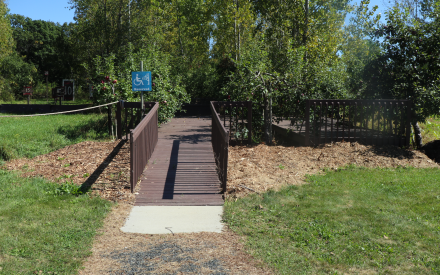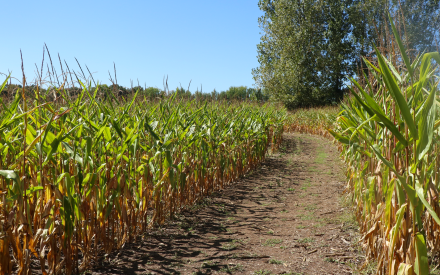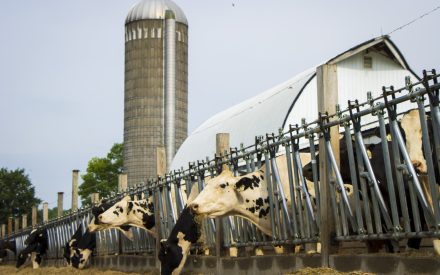
When someone reaches out to ask if your event or venue is accessible, it’s important to understand how to answer their questions. Any business or event that is open to the public must be accessible. There is no exemption for temporary events, or events that are open “just a few weeks or days” such as a county fair, Field Day, pumpkin patch, corn maze, etc.
Provide Examples
If you are asked if your business is accessible, list specific areas that are accessible
- “There is a 30-yard long, grass pathway from the four accessible parking spots to the pumpkin patch.”
- “Tours last 30 minutes. They take place on even surfaces and there is no shade along the route. Guides use a microphone.”
- “There are 2 accessible bathrooms with running water.”
Problem Solve
Think creatively to problem solve – explain how a person could access an area that may not be accessible.
- Allow someone to drive their own vehicle to the pumpkin patch instead of riding the hay wagon.
- Set aside an area on the edge of an orchard or pumpkin patch that has parking adjacent.
Often people with disabilities are excellent problem solvers – they have to be! Ask how they have accessed similar events or venues before and see if their solution can work in this situation.
Ask for time to provide accommodations, up to a week is reasonable for most requests.
Frequently Asked Questions
Ensuring your event is accessible isn’t just about legal compliance; it’s about creating a more equitable and enriching experience for everyone involved. Here are some common questions about responding to accessibility requests.
How do you make your event, festival or agritourism accessible?
- By providing reasonable accommodations
- To determine what is reasonable, you should first consider what is not reasonable
- You can ask what accommodations they need – this does not commit you to providing exactly what they request, if you can provide access another way
Do you have to agree to every accommodation request?
- Not if it is an unreasonable request
- “Unreasonable” is not based on your personal opinion, there is legal guidance for what could be considered unreasonable
A request is not reasonable and does not have to be granted if it:
- Fundamentally alters the nature of the service provided
- Poses a direct threat to the health and safety of self or others
- Poses an undue financial hardship or administrative burden
What may be an unreasonable request?
- Any request which creates a safety or health hazard for the individual or others
- Example: If the individual cannot access the maze or hay wagon on their own, or with the assistance of their caregiver
- Any request which fundamentally alters an essential aspect of the service, activity or program provided
- Example: Making a barn or the corn maze dust or pollen free (not possible due to the nature of a corn maze, or a barn)
- Example: If someone asks that you remove a certain animal from the petting zoo because they are allergic, that could be seen as unreasonable, if you have a petting zoo or farm animals are part of the attraction
- Any request which creates an undue financial or administrative burden
- Example: If a property owner said they cannot make their site accessible due to “undue financial hardship” a court would consider total assets of the business, not just the income of the agritourism site
- Example: If someone asks that the parking lot be paved, that is probably unreasonable, but you should keep the lot/field mowed, and fill in holes where possible
What about the cost? Who pays for accommodations?
- Many accommodations do not cost anything to provide, or may have a low cost and increase safety and usability of the facility or program for everyone (Universal Design)
- The organizer/host of the event is responsible for paying for the accommodations.
- You cannot charge a person for accommodations
- What if the requested accommodation is expensive? Is that unreasonable? Probably not
- If you claimed undue financial hardship, and you were sued, a court would consider all your business resources.
Do I have to allow service animals?
- Yes! Service animals are allowed to accompany their handler almost anywhere (exceptions include sanitary food preparation areas and sterile environments in hospitals). For more information about accommodating services animals, review the article ADA Requirements: Service Animals.
What questions can you ask when determining if an animal is a service animal?
- Is the dog/mini horse a service animal required because of a disability?
- What work or task has the animal been trained to perform?
- You cannot ask for a demonstration of the animal’s work
- You cannot ask for documentation for the service animal
- You may not inquire about the nature of the person’s disability
Additional information about service animals
- Service animals – service dogs or mini horses only
- Service animals cannot be excluded because another person is afraid of dogs, or allergic
- Emotional support or therapy animals are not covered under ADA, and do not have to be admitted
- Housing laws are different & may allow support or therapy animals
- Animal must be under the handler’s control at all times
- There is no required certification for a service animal
- The animal is not required to wear a vest to indicate they are a service animal
- The animal may have to work off leash (depending on their tasks)
Additional information related accessible Agritourism can be found in the article, “Making events, fairs, and agritourism accessible.”
Examples of incorporating Universal Design into an Agritourism venue can be found in the article, “Universal design examples for Agritourism events.”
Adapted from materials created by Ohio AgrAbility – Making events, fairs, and agritourism accessible